
Värava Farm
Farm & village
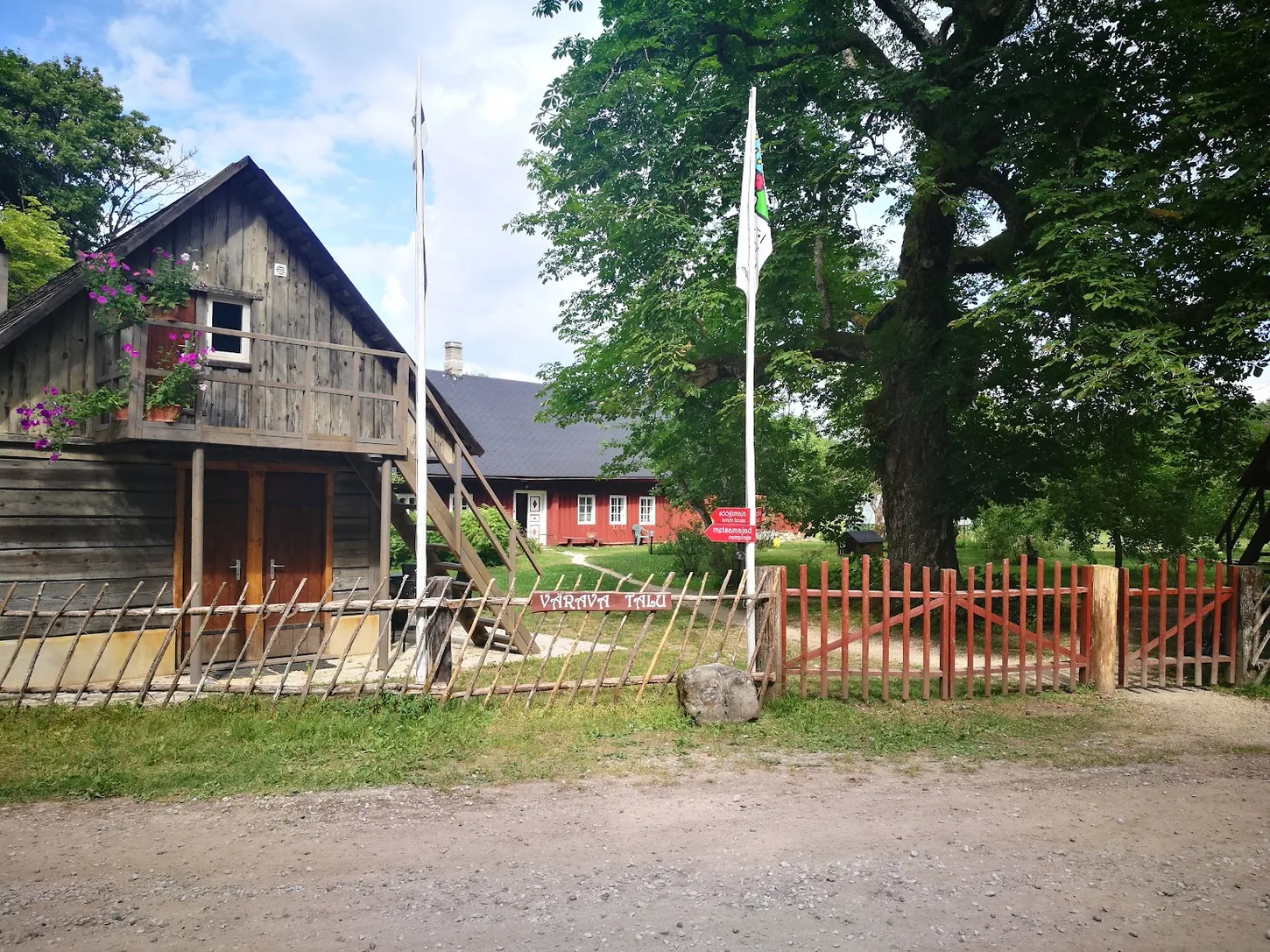
Our farm in Selgase village was founded in 1850 on the border between two parishes, marked by a stone wall and a gate – hence the name Värava (from the Estonian word for ‘gate’). It is known that the founders had lived a couple of hundred metres away at Aksli Farm since the Northern War. We, the current owners of the farm, are their direct descendants.
In the middle of the yard stands a large horse chestnut tree, planted in 1893. It measures 3 metres and 15 centimetres in circumference. Villem, the grandfather of the present farm owner, Aado, planted the tree. His father Aado, who was the gardener at Pidula Manor, brought him the sapling.
There was once a manor in Selgase village. It was granted as a fief to the Essen family in 1572 and was later incorporated into Pidula Manor. The von Essen family regards the manor as its ancestral home and has marked its site with a memorial stone.
People in Selgase village have farmed, made tar and burned lime. The remains of the kilns can still be seen in several places. Before the Second World War, the village had a sawmill, one of the largest enterprises in Saaremaa at the time. The local stone, known as dolomite, has long been quarried here, and quarrying continues today.
The Angla Cultural Heritage Centre and the Kaali Visitor Centre were built using Selgase dolomite. The stone has been used to finish various buildings in St Petersburg and Moscow. Dolomite is one of the most common materials for souvenirs in Saaremaa. Pidula Manor, which is 2 km from the village and is currently being restored, was also built using Selgase dolomite.
There is a lot to see in the surrounding area. Kalja kurisu, Saaremaa’s largest karst sinkhole, and the State Forest Management Centre’s hiking trail are within two kilometres of the farm. There are several other hiking trails nearby, by Lake Konati and along the shores of Tagalahe Bay. The picturesque Lake Karujärv and Pidula Fishing Farm are also only a few kilometres away. The local forests are rich in berries and mushrooms.
We rent bikes if you want to explore the area. Breakfast and sauna sessions can be booked. Games, balls and swings are available. You can use the outdoor kitchen or make a bonfire. Accommodation is available in cabins and in rooms in the former granary. If you would like to get to know Saaremaa better, guide services are available on Saaremaa and Muhu Island.
Your stay on Saaremaa
When would you like to visit?
Send us your dates and the number of guests, and we’ll help you choose a place to stay.